UFC Prop Bets and Specials: MMA Betting Edge for UK Punters
 Available in US
If I had to pick one corner of the UFC betting slate where careful homework still beats the market with embarrassing consistency, it would be the prop markets. Not the headline moneyline, not method-of-victory, not even round totals — the softer markets that sit at the bottom of the bookmaker’s interface, often labelled “specials” or “more bets.” That is where the bookmaker has fewer eyeballs scrutinising the price, less liquidity flowing in, and less time spent by the trader fine-tuning the line.
The trade-off is obvious. Soft markets come with wider margins, capped maximum stakes, and a tendency to disappear from your account if the bookmaker catches you winning too consistently. But for a recreational punter who is doing real work on each card, the props are where edges actually exist in 2026. The mainline markets have been ground down by sharp money and modelling. The props haven’t.
Analyzing “Fight to Go the Distance” UFC Prop Markets
The “go the distance” market — settled simply on whether the fight reaches the final bell — is the prop I bet most often. It strips out method, fighter selection, and round timing in one binary. With about 55% of UFC fights in 2024 going the distance, the baseline probability is already useful, and the matchup-specific adjustments are usually wider than the price reflects.
The market typically settles between +100 and +160 on “yes” depending on the matchup, and between -120 and -200 on “no.” Where it gets exploitable is on three-round prelim fights between two methodical strikers or two defensive wrestlers. Decision rates in those matchups run far higher than the divisional average — sometimes 70% or more — and yet the “go the distance” line still sits near evens. That’s a 15- to 20-point edge that shows up routinely on the bottom half of cards.
The inverse is true at heavyweight. Two-thirds of heavyweight fights end early. The “go the distance: no” line is usually priced fairly because the bookmaker knows the base rate, but occasionally on five-round heavyweight main events the price drifts long because the model over-weights the extra rounds as opportunities to recover. Worth watching when the matchup looks like an early finish in disguise.
Performance and Fight of the Night Markets
Performance of the Night and Fight of the Night bonuses are awarded by UFC management after every card — typically two POTN bonuses (one per fighter) and one FOTN bonus (split between both fighters). Bookmakers offer markets on which fight will win FOTN and which fighter will win POTN, with prices ranging from 5/1 on the most likely candidates to 50/1 on prelim no-names.
These markets reward two things. First, knowing the format. A fifteen-fight card has roughly a 7% baseline probability per fight of winning FOTN — but the actual distribution skews heavily toward main-card fights with action-friendly matchups. Prelim fights almost never win FOTN unless they produce a genuinely memorable performance, which means prelim FOTN prices at 25/1 typically aren’t value despite looking long. Main-card stylistic-mismatch fights priced at 6/1 or 7/1 are usually closer to true value.
Second, knowing the fighter type. POTN bonuses go disproportionately to finishers — knockouts and submissions, rarely decisions. A fighter with an action-fighter reputation and a recent KO bonus is more likely to win POTN than a methodical decision-grinder, regardless of who wins the actual fight. Backing the finisher at a slight premium often beats backing the favourite at chalk price.
The honest disclaimer: these are entertainment markets. They are not where serious money lives, but they are where soft prices and modest +EV picks tend to cluster, and they make every fight on the card matter for the punter who has skin on the bonus market.
Knockdown, Takedown, and Strikes Props
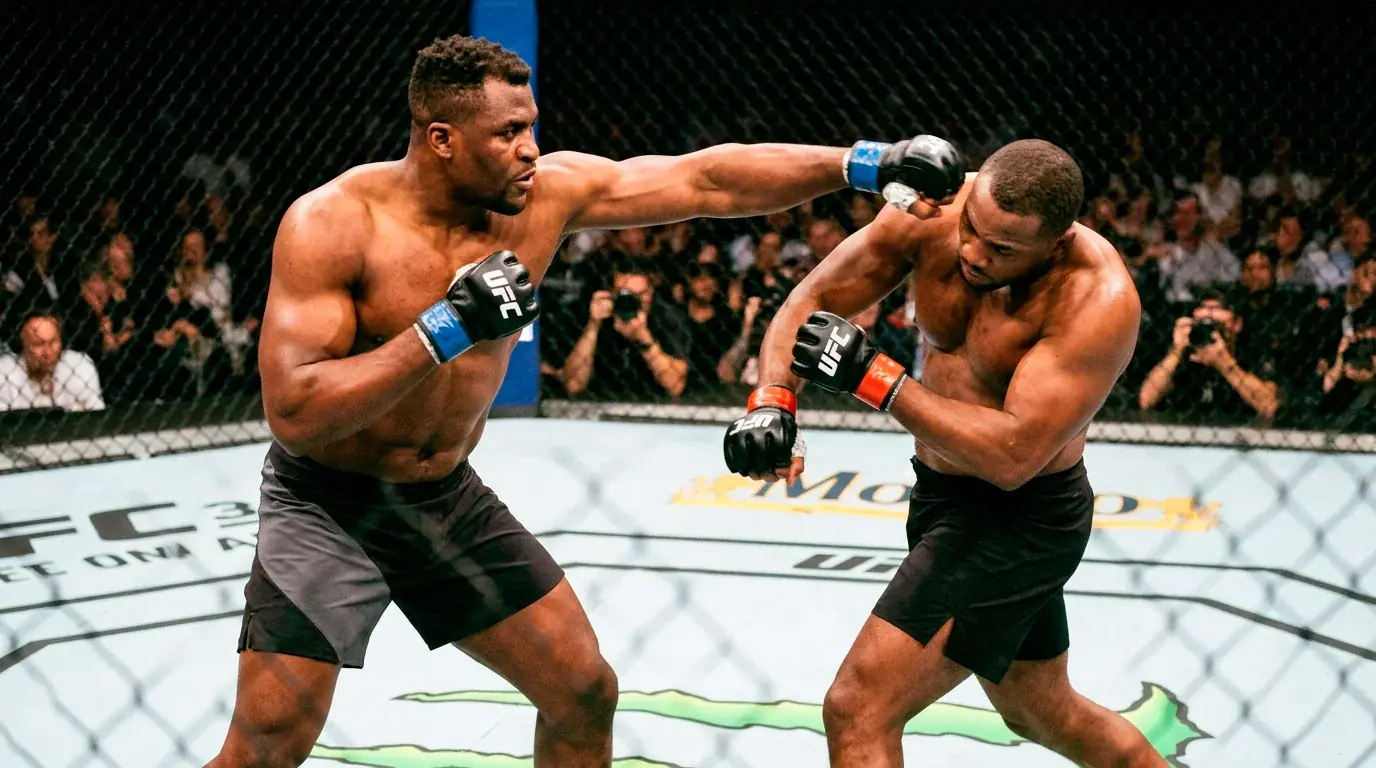
The statistical prop markets — over/under on knockdowns scored, takedowns landed, significant strikes connected — are where pure analytical work pays the highest dividend. The bookmaker sets the line by averaging the two fighters’ recent performances and adjusting for opponent quality, but the averaging often misses stylistic asymmetries.
Take significant strikes. The over/under is usually set somewhere between 60 and 120 total significant strikes landed across both fighters depending on the matchup. A high-volume kickboxer with a strikes-per-minute average of seven meets a defensive grappler whose typical fight produces three significant strikes per minute landed. The line might be set at 95 total. The actual production depends entirely on time spent standing — if the grappler controls 60% of the fight on the mat, total significant strikes land far under the line. If the kickboxer keeps it standing, far over.
Takedowns are similar. A wrestler with a 4.5-takedown-per-fifteen-minutes average meets a fighter with 60% takedown defence. The bookmaker sets the takedowns-attempted line at 7.5. The mathematical expectation is closer to 9 attempts if the wrestler shoots his usual rate, but the bookmaker accounts for the possibility of an early finish — which on most non-heavyweight bouts is less likely than the line suggests. Worth a look.
Knockdown props are the most volatile and the most occasionally generous. “Knockdown in the fight” markets are usually priced at -130 or so for “yes.” On heavyweight fights and main-card striker bouts, the true probability is much higher — knockdowns happen in roughly 40% of UFC fights overall, and well over 50% in heavyweight bouts. The “yes” price at -130 is occasionally a steal at +110 expected. Look for it.
Head-to-Head Prop Markets
Head-to-head props compare specific stats between the two fighters: who lands more significant strikes, who scores more takedowns, who controls more time. The bookmaker prices these as essentially fifty-fifty propositions, with margin on each side.
The market is occasionally exploitable when one of the two fighters has an obvious dominant tendency in one stat. A pure wrestler against a striker, on the “most takedowns” market, is rarely priced as conservatively as the takedown imbalance suggests — even when the striker has a sub-50% takedown defence record. The wrestler at -180 on “most takedowns” might actually represent a 75% probability outcome, which means the price is well in your favour.
The catch is that these markets settle on official UFC stats only, which can produce edge cases. A takedown that was reversed before the official “control” timer started might not count. A significant strike that didn’t connect cleanly enough might not get scored. Read the settlement rules before staking, because the official feed is the only source the bookmaker uses, and that feed is occasionally idiosyncratic. Dana White is a notoriously protective president of the brand, and as he likes to remind broadcasters, “We were not allowed to go into New York for a long time. It was illegal in New York. We are eight of the top ten all-time biggest gates at Madison Square Garden.” The promotion controls its own stats, and the stats are what the bookmaker pays out on.
Why Props Reward Patience Rather Than Volume
One of the hardest lessons in prop betting is volume restraint. The temptation, once you’ve identified a soft market, is to bet every fight’s prop in that category. The reality is that most fights have no genuine edge in the prop market — the line is roughly right, and you’d be paying margin for noise. Genuine prop edges come up maybe two or three times per card, and those are the ones worth staking.
The other discipline is stake sizing. Prop markets typically have maximum stake caps lower than the moneyline market — sometimes by a factor of ten. A book might let you stake £500 on a moneyline but cap the same fight’s prop bet at £50. That cap is a signal: it tells you the bookmaker isn’t confident enough in the price to take real action on it, which is also a hint that there’s edge in there for the careful punter. Respect the cap, take the price, and don’t push.
For the bigger-picture question of how to combine props with other markets into a same-fight slip — including the correlation discounts that get applied — the bet builder guide for UK punters walks through the mechanics in detail.
The Bottom-of-the-Card Edge
Props are not where every punter should start, and they are not where casual money should live. They are higher-margin, lower-liquidity, and more prone to settlement quirks than the mainline markets. But for punters willing to do the divisional and stylistic homework — to actually read tape, track stats, and watch how specific matchups produce specific stat distributions — they are the corner of the UFC slate where edges are still genuinely available in 2026.
The mainline UFC market has been picked clean over the last decade. The props have not. Treat them as a reward for analytical work rather than as a casual side bet, and they earn their place on the slip.
Do UK bookmakers offer UFC strikes-landed props?
Most major UK bookmakers offer over/under on total significant strikes for main-event UFC fights, with availability narrowing through the prelim card. The lines vary noticeably between books because each bookmaker uses a slightly different model and prior period of averaging — which means line-shopping across two or three books is genuinely worthwhile on strike-volume props, often saving you five to ten points of margin per leg.
Are UFC novelty bets settled on official UFC stats?
Yes — UK bookmakers settle all statistical props on the UFC’s official stat feed, which is produced post-fight and audited. Quirks happen — strikes that didn’t connect cleanly enough may not score, takedowns that were immediately reversed may not register — but those are usually consistent across all books. Read each market’s specific settlement rules before staking, especially on close lines, because the official feed is the only source the bookmaker uses.
Published by the how can i bet on ufc Fights team.