UFC Live Betting UK: In-Play Odds and Market Strategies
 Available in US
Table of Contents
- UFC Live Betting Market Construction and Odds
- Between-Round Markets: The Calm Window
- In-Round Live Markets: What Moves the Line
- Cash-Out on UFC Bets
- Why Markets Suspend Mid-Round
- Common Mistakes UK Punters Make Live
- Live Betting Bankroll Discipline
- How UK Regulation Affects Live UFC Betting
- Three Live-Betting Questions Worth Settling Before Fight Night
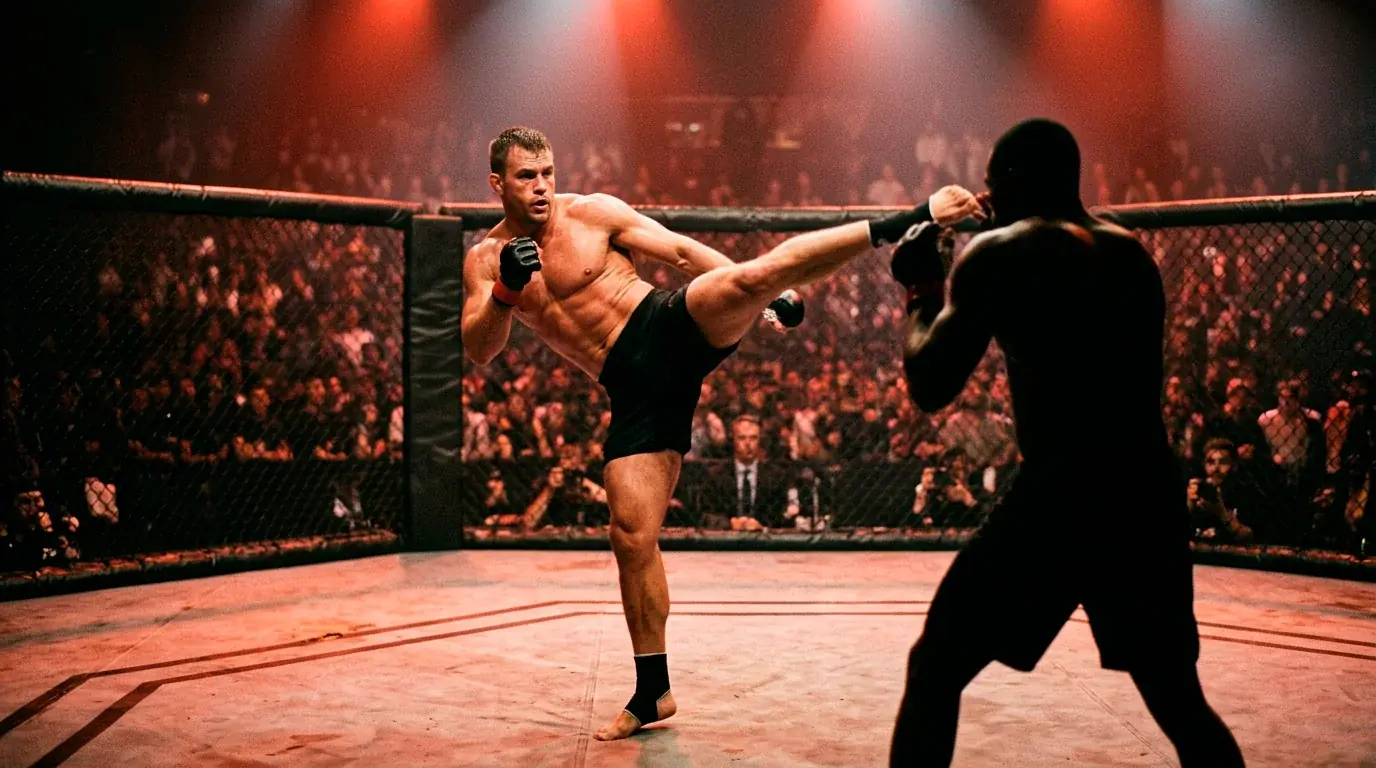
The first live UFC bet I ever placed was on a featherweight scrap in 2019. I watched a takedown, saw the price on my fighter shorten from 9/4 to 8/13 in roughly four seconds, and tried to hit confirm before it shifted again. The slip refused. I tried again. By the time the bet went through, the price was even shorter. The fight ended on the same takedown a minute later by ground-and-pound. I made about a third of what I would have made if I had bet pre-fight.
That is live UFC betting in one anecdote. The markets are fast, they update on incomplete information, and they reward punters who can read what is happening before the trader does. They also punish, brutally, anyone who treats them like pre-fight markets with a faster refresh button. Live betting is a different game with different rules, and most of the British punters losing money on it are losing because nobody told them that.
UK real-event betting — the UKGC’s term for bets on actual sporting events as opposed to virtual or casino-style products — generated £508 million in gross gaming revenue in the second quarter of the 2025-26 financial year alone, up 12 per cent year on year. Live in-play accounts for the largest share of that figure. Britain places around 290 million online bets per month on real events, and a meaningful portion of those land on UFC during fight weekends. The market is huge, growing, and structurally faster than it was even two years ago.
This piece is the tactical guide I wish I had read in 2019. We will walk through how live UFC markets are actually built, what moves the line in-round versus between rounds, how to read cash-out offers, why markets suspend, and the bankroll discipline that keeps live betting from eating you alive on a Saturday night.
If a fight takes an unexpected turn, utilizing UFC cash out options can help you secure a profit before the final bell.
UFC Live Betting Market Construction and Odds
Live UFC markets are a fusion of three things: a model running on real-time fight inputs, a trader applying judgement layered on top of the model, and a delay buffer that gives both of them a second or two to think before the customer-facing price updates. Understand the layers and the rhythm of the live market stops looking arbitrary.
The model takes inputs continuously — strikes landed, takedowns secured, control time accumulated, fighter movement, corner instructions audible on the broadcast feed. It spits out a recalculated win probability several times per second. The trader, watching the same feed, decides whether to trust the model’s read or override it. Most of the time, the trader trusts. Occasionally — usually after a moment the model has not been trained to weight properly, like a clean head kick that lands but does not knock down — the trader nudges manually.
The delay between the action on the broadcast and the published price is typically two to four seconds on UK books, sometimes longer on apps with less aggressive infrastructure. That delay exists for a structural reason: it gives the trader time to catch obvious mismatches before the customer can act on them, and it protects the book against latency arbitrage by professional punters with faster broadcast feeds. From your seat, the delay is invisible most of the time. Occasionally — when something dramatic happens — it becomes very visible, because the price refuses to update for the half-second it takes the trader to confirm what just happened.
One useful mental model: think of the live price as the model’s best guess plus the trader’s veto plus a small structural delay. When all three agree, the price moves smoothly. When they disagree, the price flickers — sometimes updating, sometimes rejecting bets, sometimes suspending the market entirely. Those flickers are the moments worth watching.
Between-Round Markets: The Calm Window
The minute between rounds is the calmest window in live UFC betting and the one I do most of my live action in. The fight is paused, the corners are talking, the broadcast is showing replays. The model has a full set of updated inputs from the round just completed and the trader has sixty seconds to think before the next round begins. Prices are stable, dropdowns are responsive, and slips settle in the time it takes to click confirm.
Between-round prices reward two specific reads. The first is the corner read. A fighter sitting down on a stool with a clear path-forward instruction from a credible coach is in different shape from a fighter sitting down to be told he is losing and needs to find a knockout. The broadcast picks up corner audio reliably now, and most UK books update prices within thirty seconds of broadcast corner audio that suggests one fighter is in trouble.
The second is the cardio read. By the end of round one, you have a measurable read on which fighter is breathing harder, which is moving slower, which is asking the cornerman for water with both hands rather than one. That read does not show up in the model’s striking and takedown inputs immediately, but it shows up reliably in the next round’s striking output. Backing the fresher fighter to win in rounds 2 to 3, between rounds 1 and 2, is the cleanest single live UFC trade.
Lines between rounds also offer the only reliable opportunity to back live underdogs at meaningful prices. An underdog who has clearly lost round one will see his pre-fight 5/2 price drift out to 4/1 or longer, even when the fundamentals have not shifted much — the model overweights recent round outcomes relative to underlying ability. A patient punter with a strong read can pick up real value here, particularly on grapplers who have lost a striking round but still have their preferred game plan available.
In-Round Live Markets: What Moves the Line
In-round live betting is the volatile cousin of the between-round market. Prices move every few seconds, sometimes by full fractional points on a single exchange, and the windows for placing a slip are short enough to feel like they were designed to be missed. Most days they were not — but the trader and the delay buffer are working hard.
Four things move in-round prices on UFC most. Takedowns are the largest single mover — a successful takedown can shift the moneyline by twenty per cent of its implied probability in under five seconds. A knockdown is bigger still, often combined with an immediate market suspension while the trader assesses whether the knockdown will lead to a stoppage. A cut that the doctor checks at the break is the slowest mover but the most consequential — if the doctor stops the fight at the next inter-round break, the market resolves on whatever the trader last published before the stoppage. Fence control with significant ground-and-pound is the fourth mover, especially when the fighter on the bottom is showing no obvious path back to his feet.
What does not move the line nearly as much as casual punters expect: a clean strike that lands but does not stagger. Strikes are an input but a relatively low-weighted one outside of knockdowns. Two fighters trading volume strikes at distance can produce a round that visibly favours one side without the live moneyline moving more than a few per cent. The model knows that volume rounds rarely lead to finishes, and the trader does not override that read just because the broadcast graphic shows one fighter has landed twenty more punches.
The single hardest live read is whether a fighter who has just been wobbled will recover. Wobbles produce maximum line movement — the underdog’s price collapses from 7/4 to 4/9 in seconds — and they also produce maximum reversal. Most wobbles in UFC are recovered. The fighter who looked finished thirty seconds ago is sometimes back in control by the end of the round. Backing the wobbled fighter at 4/9 is occasionally good value; backing him at 4/1 (which you would have been able to do two seconds earlier) is excellent value. The delay buffer is what prevents most punters from capturing the second of those.
Cash-Out on UFC Bets
Cash-out is the live betting feature most marketed and least understood. Books offer it across most live UFC markets, and the offer almost always sits below the mathematically fair value of the remaining position. The book is charging a margin to let you exit early. Whether that margin is worth paying depends on what you are actually trying to buy with the cash-out.
The mechanics are straightforward. You placed a pre-fight slip at, say, 5/2 for your fighter to win. He has just won round one. The book is now offering to settle your slip early for an amount that reflects the new live moneyline, minus a margin of typically 5 to 10 per cent. So the live moneyline might say your fighter is now 4/6 — implied probability 60 per cent — which on a £20 stake would mean a fair cash-out around £30. The actual offer will be £27 to £28, with the book pocketing the difference.
When cash-out makes sense: you have re-read the fight and become less confident than you were pre-fight. The live moneyline reflects your new view, the cash-out lets you lock in a portion of the upside, and the margin you pay is the price of certainty. That is a reasonable trade if you genuinely want certainty more than expected value.
When cash-out is a bad idea: you are still confident in your original read but the live price has overshot. A wobble that you believe will not lead to a finish has compressed the underdog’s price, but you think the underdog will still win the fight. Cashing out at that compressed price locks in a worse outcome than holding. The book is offering a margin against your read; if your read is good, do not pay it.
Partial cash-out is the underused middle option. Most UK books now let you cash out a portion of your stake rather than all of it — settle £15 of a £20 slip at the live price, leave £5 to run. That structure is the cleanest way to lock in some profit while keeping a piece of the original upside, and it is the version of cash-out I use most often myself.
Why Markets Suspend Mid-Round
The grey screen with “market suspended” written across it is the most common live betting experience I see new punters get angry about. The book is not punishing you. It is doing exactly what its risk infrastructure was designed to do. Knowing when and why suspensions happen turns them from a frustration into a piece of information.
Three things trigger automatic suspension. A knockdown is the most common — once a fighter goes down, the market suspends until the trader confirms whether the referee is letting the fight continue or has waved it off. Doctor stoppages between rounds suspend the market for the duration of the doctor’s check, with prices resuming only after the bout is cleared to continue. Scoring confusion at the end of a round — usually around close championship rounds — can hold the market for ten to thirty seconds while the trader confirms the official scorecard before the next-round market opens.
Technical issues are the fourth category. A broadcast feed interruption forces suspension because the trader cannot see what is happening. A failure of the data feed from the venue forces suspension for the same reason. These are rare but they do happen, particularly on cards held in non-standard venues.
The practical implication is that you cannot place a live UFC slip during the most consequential moments of the fight. That is deliberate. The book is protecting itself against information asymmetry, and it is also, somewhat incidentally, protecting you from the worst of your own impulses — placing a slip in the panic-second after a knockdown is rarely the right call regardless of which side you take.
Common Mistakes UK Punters Make Live
Five mistakes I see in the live UFC market every Saturday night, in roughly the order they cost punters money. First: chasing. A pre-fight slip that loses round one becomes a between-rounds slip on the same fighter at a worse price, “just to get even”. The book loves this customer. The fighter who lost round one is now mathematically less likely to win the fight, and you are stacking exposure on a deteriorating position at a worse price than the original.
Second: ignoring closing line value on live legs. Live betting is so visceral that most punters never bother to track whether they are getting good prices over time. They should. The same closing-line-value framework that works on pre-fight markets works just as well on live ones — record the price you took, record where the market settled at the next inter-round break, look at the gap over fifty or a hundred slips. If you are consistently worse than the next benchmark, you are paying the book to entertain you, not betting to win.
Third: parlaying live legs. A two-leg live multi looks like value because the headline price is larger than either single leg. It almost never is. The book’s margin on each live leg is wider than on a pre-fight leg, and the combined slip stacks those margins multiplicatively. Live multis are an entertainment product, not a value play.
Fourth: placing slips during suspensions you can ride out. When the market reopens after a knockdown, the price will be different from what it was a second before suspension. If you tried to place a slip at the pre-suspension price, the book will offer you the new price on confirm. Most punters confirm anyway, often at a much worse number than they had wanted. The discipline is to read the new price and decide whether it still represents the bet you wanted to make.
Fifth: betting cash-out as if it were a separate bet. The cash-out offer is a derivative of your original slip. The right comparison is not “does the cash-out price make sense” but “would I make the original slip again at this implied live price”. If yes, hold. If no, cash out — even with the margin haircut.
Live Betting Bankroll Discipline
Live UFC betting is volatile in a way that pre-fight betting is not. Prices swing, emotions swing harder, and the temptation to recover a losing pre-fight slip with a live one is structural. The discipline that keeps a bankroll alive across a fight night is mostly about cutting off the emotional channel before it does damage.
Rule one: set a live betting cap before the first walk-out. A fixed pound figure — say, 25 per cent of the night’s total bankroll — that you will not exceed on live action regardless of what happens. Pre-fight slips do not count against the cap. The cap exists specifically to prevent chasing.
Rule two: a single live slip should not exceed 1 to 2 per cent of the night’s bankroll unless you have a specific, articulated read on why this slip is unusually high-confidence. The dramatic moments — a wobble, a takedown, a corner that looks worried — feel like high-confidence reads in the moment. They almost never are.
Rule three: walk away after a live slip that lost in obviously wrong fashion. A takedown you bet against immediately followed by a finish you also bet against is the moment your reads have decoupled from what is actually happening in the cage. The right move is to close the app, watch the rest of the round on the broadcast, and re-enter only at the next inter-round break with a fresh look.
The wider context matters here. Around 1.4 million British adults are estimated to have a serious problem with gambling, roughly 3 per cent of the adult population. Live betting amplifies the psychological hooks that drive problem gambling more than pre-fight betting does — immediacy, sensory engagement, the ability to recover a losing position by placing another bet. A live betting cap and a stake size discipline are not just maths; they are guardrails against the part of the brain that is not betting on outcomes but on emotions. If those guardrails feel unwelcome rather than useful, that is a signal worth heeding.
How UK Regulation Affects Live UFC Betting
The UK regulatory framework treats live betting the same way it treats pre-fight betting — same licensing requirements, same dispute resolution, same self-exclusion infrastructure. There is no separate live-betting regulator and no separate live-betting tax. From a compliance perspective, live UFC betting sits inside the General Betting Duty perimeter and will move to the new 25 per cent remote betting rate from April 2027 like every other online sports product.
Andrew Rhodes, chief executive of the UK Gambling Commission, summed up the framework in industry remarks: “Recent data published shows that total gross gambling yield is at its highest ever level at £15.6 billion. Participation in gambling has remained stable at 48 per cent.” Live betting is part of the headline GGY figure and part of the headline participation figure. The regulator is not treating it as a separate beast, but it is paying close attention to harm patterns within the live category specifically.
One product-level rule worth noting because the parallels are instructive. The £5 maximum stake on online slots from April 2025, and the tighter £2 maximum for 18 to 24 year-olds from May 2025, demonstrate that the Commission will legislate session-level caps on products where harm data warrants. Live sports betting has not seen equivalent caps and is unlikely to soon — the harm profile is different and the case for product-level limits has not been made — but the precedent exists and the regulator’s willingness to use it is on the record.
For an everyday UK UFC punter, the practical takeaway is simple. Live betting on a UK-licensed book operates inside the same consumer protection framework as pre-fight betting. Withdrawals process at the same speed, dispute resolution applies, and self-exclusion blocks live and pre-fight markets together. The protections are real; use them.
Stay ahead of the bookmakers by checking the latest in-play analysis from OctaOdds.
Three Live-Betting Questions Worth Settling Before Fight Night
Three live-betting questions land in my inbox most weeks of the fight calendar. They tend to come from punters who have just had a bad Saturday night. The answers below are what I would have wanted to know before that bad Saturday rather than after. A deeper dive on when to take the money sits in our piece on cash-out mechanics for UK UFC bettors.
Is there a delay on live UFC odds in the UK?
Yes — typically two to four seconds between the action on the broadcast and the published live price on UK books. The delay exists so the trader can catch mismatches between the model’s read and what actually happened in the cage, and so the book can protect itself against latency arbitrage by punters with faster broadcast feeds. From the customer side, the delay is invisible most of the time. It becomes very visible after dramatic moments — a knockdown, a takedown, a clean head kick — when the price refuses to update for the half-second it takes the trader to confirm what just happened. That refusal is not the book malfunctioning; it is the system working as designed.
Can I place a live UFC bet during a stoppage?
Sometimes, depending on the stoppage and the book. Brief suspensions — under five seconds after a takedown or a clean strike — usually resolve quickly and you can place a slip immediately on resumption, at the new price. Longer suspensions — doctor stoppages between rounds, scoring confusion, technical issues — keep markets closed for the duration. Once a fight is officially stopped (referee waves it off, doctor stops it between rounds, fighter cannot continue) all relevant live markets settle and no new slips are accepted on that fight. The single biggest mistake I see is punters trying to place slips during suspension that they then confirm at a much worse post-suspension price than they had intended.
Does cash-out always represent fair value on UFC fights?
No — cash-out offers consistently sit below the mathematically fair value of the remaining position. The book charges a margin to let you exit early, typically 5 to 10 per cent of the offer. Cash-out makes sense when you genuinely want certainty over expected value — you have re-read the fight and become less confident than you were pre-fight, and the haircut is worth paying for the lock-in. It is a bad idea when you are still confident in your original read but the live price has overshot. Partial cash-out, where you settle a portion of your stake and leave the rest to run, is the cleanest middle option for most situations.
Created by the ”how can i bet on ufc Fights” editorial team.