UFC Fighter Styles: Grappler vs Striker Matchup Data
 Available in US
The first betting framework I built that genuinely beat the market wasn’t a model. It was a one-page sheet with two columns — striker tendencies on the left, grappler tendencies on the right — and a half-page of notes about what happens when a fighter from one column meets a fighter from the other. That sheet has been on my desk for six years and it has been worth more to me than any subscription analytics service I’ve paid for since. The reason is simple. Most UFC bookmakers price moneylines on raw form and recent results. They struggle to price the second-order effect of one specific style canceling out another.
Style mismatch is the variable that most often produces the +160 underdog who beats the closing line. The market reads “fighter A has won four in a row” and prices accordingly. It doesn’t always read “fighter A has won four in a row against opponents who don’t have the specific tool that fighter B brings to this matchup.” That is the gap that careful stylistic homework lives in, and it is wide enough to make UFC the highest-upset-rate major sport in the world — roughly 28% to 32% of fights ended in underdog wins across 2024.
Wrestler-Boxer Matchups: Betting Odds Advantage
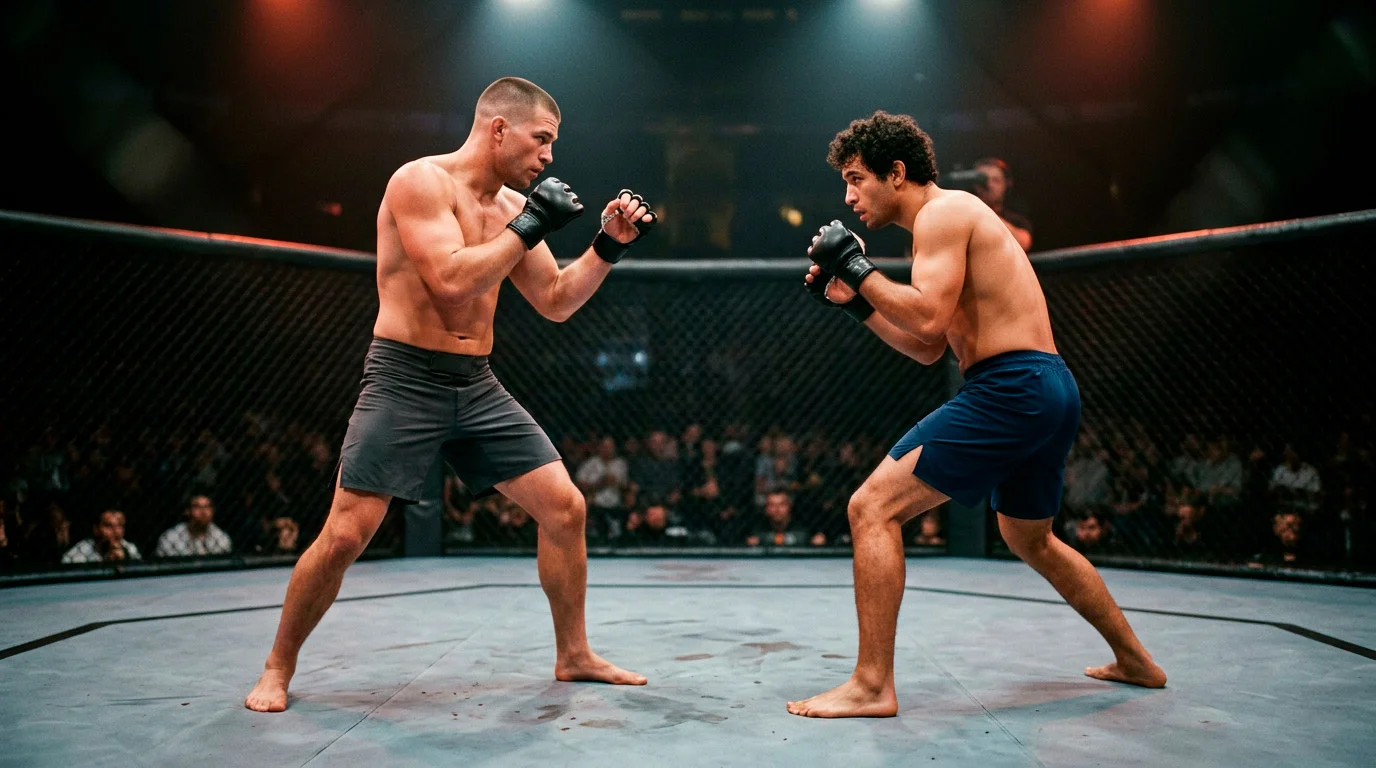
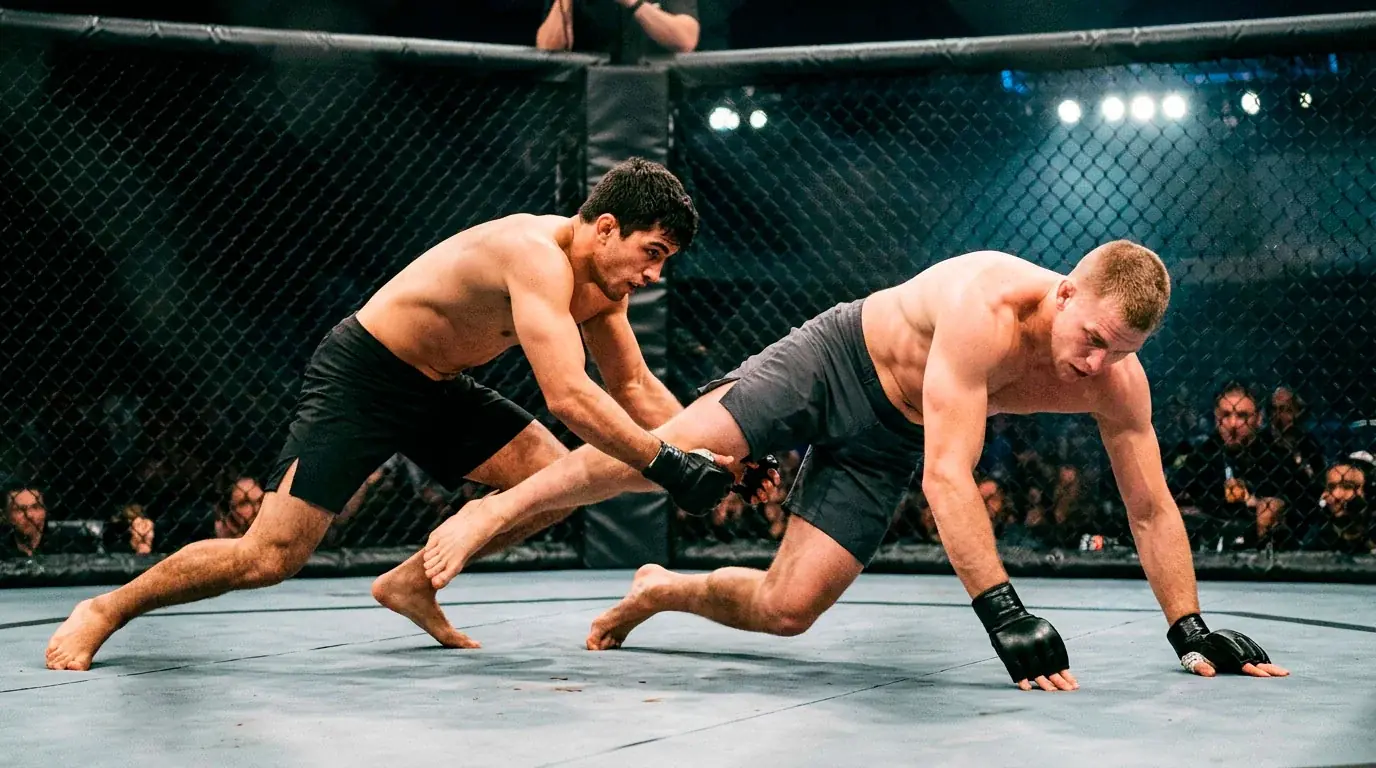
The most reliable archetype I track is the wrestler with credible boxing — a fighter whose primary tool is takedown threat but whose hands are good enough to make defending the takedown dangerous. This profile beats roughly four out of five pure strikers it meets, regardless of the betting price, because the puzzle the striker has to solve is structurally hard. Defend the takedown by stuffing it and you eat a one-two on the way back up. Defend the takedown by retreating and you give up the cage. Engage on the feet and you may catch the wrestler with a counter, but the wrestler will close the distance and shoot the moment the exchange ends.
The market underprices this profile in two specific scenarios. First, when the wrestler has been inactive for twelve months or more — the model treats the layoff as a discount even though wrestling skill is the slowest-decaying tool in MMA. A wrestler who hasn’t fought in eighteen months still wrestles the same way; only his cardio is in question, and cardio shows up in round three, not in round one. Second, when the striker is on a knockout streak — the recent KOs anchor the market’s price, but they don’t tell you anything about how the striker performs against a takedown chain.
The price band where this archetype lives is +130 to +220. Above +220, the market has usually woken up to the specific mismatch. Below +130, the wrestler is already favoured and the value is gone. In between is where the +EV picks have been most reliable in my tracking since 2019.
Pure Strikers and the Cage-Cutting Test
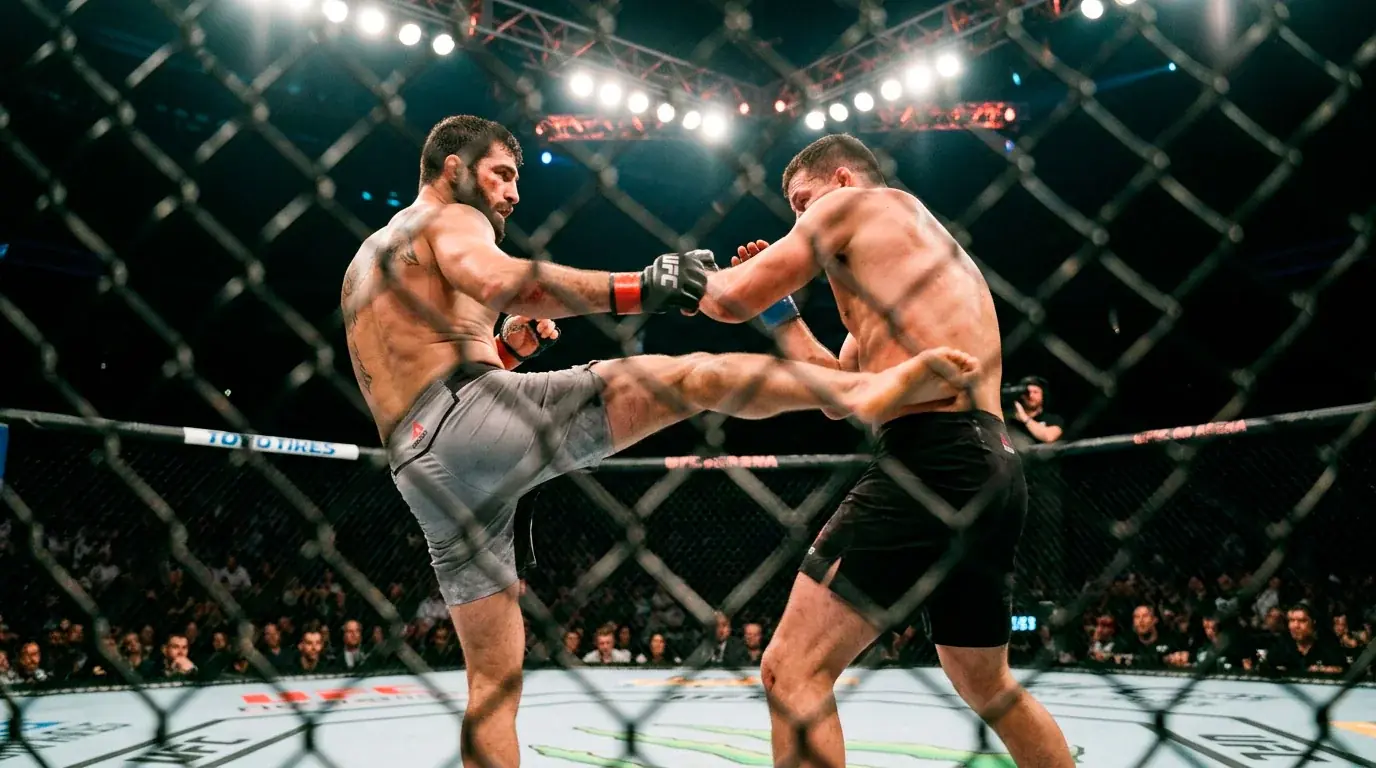
The flip side of the wrestler-versus-striker question is the striker who has cracked the takedown-defence puzzle. There is a specific tactical tell I watch for: cage-cutting footwork. A striker who steps laterally to angle away from a takedown shot is in trouble. A striker who steps forward and lands a knee or a clinch break on the takedown attempt is the one who beats wrestlers consistently.
Cage-cutting strikers are the cleanest “fade the wrestler” play on the slate. They are the profile that produced most of the headline upsets of the past five years — strikers priced at +250 to +400 against decorated wrestlers, winning by mid-round TKO once the wrestler ran out of safe takedown setups. The market has gotten somewhat better at pricing this archetype since 2022, but the +200-and-up dog with documented cage-cutting footwork is still one of the highest expected-value picks I track.
The diagnostic is in the tape, not in the statistics. A fighter can have a 75% takedown defence rate over twelve fights and still get taken down repeatedly by an opponent with a different shot setup. The number averages across opponents who weren’t using the same approach. What you want is tape of the striker handling a wrestler in the same archetype as this week’s matchup — same shot mechanics, same setup chains, same pace. If the tape exists and the striker handled it cleanly, the takedown-defence number is irrelevant. If the tape doesn’t exist, the number is what you have to lean on, and the variance is wide.
Grappler-on-Grappler Fights and the Decision Lock
When two grapplers meet, the fight rarely ends inside the distance. Both fighters are training to neutralise the other’s primary tool, and the result is typically a slow, technical, position-trading fifteen minutes that decision judges score on grappling output and cage control. About 53% to 55% of UFC fights went to decision in 2024 overall, but the grappler-on-grappler subset runs noticeably higher — closer to 70% in my tracking.
This is where the over/under 2.5 rounds market and the “fight to go the distance” prop both light up. The bookmaker prices these markets close to fifty-fifty on most fights, but on a grappler-on-grappler bout the true probability is 70% or higher. Backing “over 2.5” or “yes — goes to distance” at +100 or better is one of the most reliable singles bets the slate produces, and the variance is far lower than the moneyline pick on the same fight.
The corollary is that grappler-on-grappler decisions are difficult to call. The judges typically reward the fighter who controls position and gets reversals, but the scoring is volatile and a 29-28 verdict can swing either way on a single takedown attempt that gets reversed. I don’t bet moneylines on grappler-on-grappler fights as a rule. I bet the over and the decision-method market and let the judges sort it out.
Striker-on-Striker and the Pressure Question
Two strikers meeting is the most action-friendly matchup on a UFC card and also the most variance-prone. The single biggest predictor of the outcome is which fighter is the natural pressure-fighter — the one who moves forward, cuts the cage, and forces exchanges — versus which is the natural counter-striker, who waits, reads, and capitalises on mistakes.
Pressure-fighter against counter-striker is one of the cleanest reads in the sport. The pressure fighter wins about 60% of these matchups in my tracking, because the counter-striker has to win every exchange to keep the round, while the pressure fighter only has to land more total volume to score the takedown-equivalent on the cards. The counter-striker has to land the one big shot that ends the fight; the pressure fighter just has to keep stacking volume.
The market often gets this read wrong by overpricing the counter-striker — particularly when the counter-striker is on a recent KO streak that anchors the price. The pressure fighter at +140 against a counter-striker with two recent stoppages is the kind of bet I have been making for the better part of a decade, and the ROI has been consistently positive through hundreds of cards.
Mixed Profiles and the Honest Limits of the Framework
The cleanest betting opportunities sit on the clear archetype-versus-archetype matchups: pure wrestler against pure striker, grappler against grappler, pressure against counter. The fights that resist the framework are the ones where both fighters are genuinely mixed — competent in all phases, no obvious primary tool, no clean stylistic mismatch to exploit. About a third of any given UFC card falls into this “mixed profile on both sides” bucket, and on those fights I usually skip the moneyline entirely and look at round totals or method-of-victory props instead.
The framework also has limits at the top of the sport. Champions and elite contenders have usually rounded out their weak areas — the pure wrestler who couldn’t strike has either learned to strike or been beaten by someone who could. At the elite level, stylistic mismatches collapse into smaller margins, and the fights are decided more by camp preparation, weight cut, and the day-of variance that no model catches. The framework works best in the middle of the rankings, where archetype is still pure enough to predict.
For the bankroll side of how to size bets when you’ve identified a stylistic edge — how much to stake when the matchup screams underdog but the bankroll has limits — the bankroll management guide covers the unit-sizing maths that pairs naturally with the stylistic framework above.
Watching Tape Like a Bookmaker, Not Like a Fan
The discipline that makes the stylistic framework actually pay is watching tape the way the bookmaker has to — looking for what the fighter does badly and what the opponent does well, not for the highlight-reel sequences. Fans watch tape to see knockouts. Bookmakers watch tape to see the moment the fighter lost cage position and got pressed into the fence for thirty seconds. Punters who want to bet profitably have to learn to watch like the bookmaker.
The reward for that discipline is consistent edge on style-mismatch underdogs. The variance is high — even the cleanest stylistic mismatch loses 40% of the time, because UFC is UFC and any fighter can land any punch on any night. But the long-run economics work, and the framework remains the single most reliable predictor of dog wins I have found in a decade of tracking. The +160 dog with a clear stylistic edge is the bet I want on every card.
Do wrestlers really beat strikers 80% of the time in the UFC?
The 80% figure applies specifically to credible wrestlers — fighters with documented NCAA Division I credentials or comparable freestyle pedigrees — meeting strikers without a cage-cutting solution to the takedown. In that narrow subset, the win rate is closer to 75% to 80% in my tracking. Once you broaden it to wrestlers generally meeting strikers generally, the rate drops closer to 60%. The framework rewards specificity — generic wrestler-versus-striker logic isn’t enough to beat the market.
How long should I watch fighter tape before betting?
I budget at least an hour per fight I’m considering betting on, split between the most recent two fights and one earlier reference fight against the relevant archetype. The recent fights show current form and tactical adjustments; the reference fight shows how the fighter handled the specific style this matchup brings. Less than that and you’re betting on highlights; more than that has diminishing returns once you’ve identified the key tactical questions.
Created by the ”how can i bet on ufc Fights” editorial team.