UFC Heavyweight Betting: Reading the Power Division
 Available in US
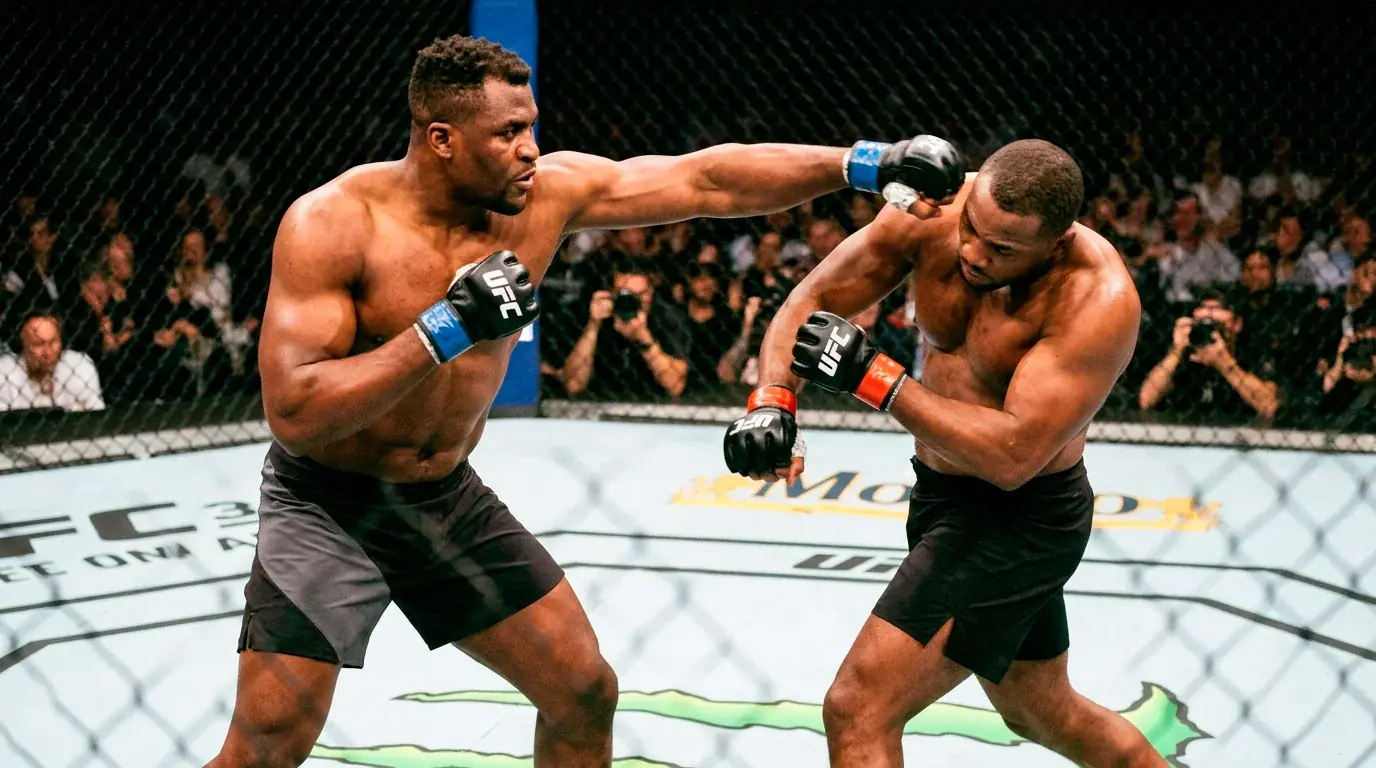
Heavyweight is the most punishing division to model and the most rewarding to bet correctly. The single biggest fact about UFC heavyweight is that roughly 66% of fights end inside the distance — by far the highest finish rate in the promotion. The corollary is that decision rates run around 28%, the lowest in the UFC roster by a significant margin. Two fighters over 205 pounds throwing real punches at each other do not generally finish fifteen minutes upright. The clock matters less than the next clean shot, and the next clean shot can land at any moment of any round.
That structural fact changes which markets pay and which don’t. Over/under round totals on heavyweight fights are a fundamentally different question than the same markets at flyweight. Method-of-victory props skew dramatically toward KO/TKO. Round one finishes carry an outsized share of the total finish distribution. Bettors who treat heavyweight as “lightweight with bigger fighters” lose money systematically; bettors who treat it as its own structural problem produce some of the cleanest edges the calendar offers.
The Round One Finish Premium
Round one in UFC heavyweight ends roughly 35% of all fights — a rate higher than any other weight class. The reasoning is straightforward physiology. A heavyweight punch carries more raw kinetic energy than a punch at any other weight, and heavyweight chins are not proportionally tougher than chins at lower weights. The first clean exchange of round one is the moment of maximum knockout danger, because both fighters are fresh, both are within striking range, and the margin for error on defence is smaller than at any other moment of the fight.
The betting implication is that round one finish markets on heavyweight bouts are priced more closely to fair value than at any other weight class — and even so, they often retain modest edge on specific matchups. The bookmaker prices the typical heavyweight bout’s round-one finish probability at around 35% in line with the historical rate. Where the value appears is on matchups with specific power-versus-suspect-chin profiles, where the true round-one finish probability is closer to 45% or 50% but the market still prices it as a generic heavyweight at 35%.
The diagnostic is the chin record. A heavyweight who has been knocked out in three of his last seven fights is not the same betting proposition as a heavyweight who has never been stopped. The market sometimes prices the moneyline correctly on these fighters but mis-prices the round-one finish probability for their opponents, because the chin record only fully matters when paired with a power-puncher opponent. Matching a documented suspect chin with a documented one-punch finisher produces some of the cleaner round-one finish bets the year provides.
Why Decision Rates Run So Low
The 28% decision rate at heavyweight has consequences that flow through every market. The most direct is that “go to decision” props pay better than at any other weight — the price is typically +250 or longer on most heavyweight fights, reflecting the structural unlikelihood of fifteen continuous minutes of heavyweight striking without a stoppage.
The trap is that the underlying probability isn’t always 28%. Some heavyweight fights are systematically more likely to decision than others — wrestler-versus-wrestler matchups, technical strikers without one-punch power, fighters with extensive amateur boxing backgrounds who emphasise defence. In those specific matchups, the decision probability can climb toward 45% or 50%, but the market price often still reflects the divisional average. A wrestler-versus-wrestler heavyweight fight at +280 on “goes to decision” represents 26% implied probability — but the actual probability on these specific matchups runs closer to 50%, which is substantial edge.
The inverse is true on power-versus-power matchups. Two heavyweights with documented finishing power and suspect chins produce decision rates closer to 10% — well below the divisional average. The “goes to decision” market is occasionally priced too short on these fights because the bookmaker is anchoring on the divisional baseline. Don’t back the decision in those spots; back the under 1.5 rounds instead, where the prices are often generous relative to the actual finish probability.
The Cardio Cliff and Why It Matters Less
Cardio is a major variable at every weight class except heavyweight, where it matters less than at any other weight. The reasoning is that heavyweight fights typically don’t last long enough for the cardio question to fully express itself. A fighter with mediocre conditioning in the lightweight division gets exposed in round three; the same fighter at heavyweight is more likely to have already finished or been finished before the cardio collapse begins.
The betting implication is to weight cardio less heavily on heavyweight matchups than you would on smaller-fighter cards. A heavyweight with documented gas-tank issues is still a worse fighter than one without, but the discount you apply to their price should be smaller than it would be at lightweight or featherweight. Most heavyweight cardio failures happen in round three — and many heavyweight fights don’t reach round three.
The exception is heavyweight five-round main events. Twenty-five minutes is long enough for cardio asymmetries to express themselves, and the round-four-and-round-five finish patterns become genuinely relevant. Heavyweight champions and contenders meeting in five-round bouts produce cardio-driven finishes at a rate the market often under-prices. A heavyweight main event going past round three becomes a substantially different proposition than the same fight ending in round one, and the late-round finish markets on heavyweight five-rounders have produced consistent edge in my tracking.
The Public-Money Pattern at Heavyweight
Heavyweight attracts disproportionate public money compared to its market share of the UFC roster. The reasoning is partly entertainment — knockouts are dramatic, heavyweight fights produce more highlight-reel finishes than any other division, and casual fans gravitate toward the spectacle. Roughly 25% of UFC betting handle on a typical mixed card flows to heavyweight fights even when they represent less than 15% of the bouts on the card.
The consequence is that heavyweight underdog prices benefit from public-money distortion in much the same way title-fight challengers do. Public money flows to the favourite — typically the better-known fighter or the recent finisher — and the underdog drifts to a longer price than the matchup justifies. The market makes the line, but the public-money pressure shapes which prices stick and which get pushed.
The cleanest expected value bets in the division often sit on underdogs in the +150 to +300 range with one of two specific profiles: durable veterans who can absorb early punishment and survive into the round-three finish window, and high-volume strikers who exploit the lower cardio-defence priority of opponents who don’t expect to have to manage their wind. Neither profile is sexy, neither produces the kind of finishes that go viral, and the market consistently under-prices them as a result.
Method-of-Victory Distributions at Heavyweight
The method distributions at heavyweight tilt heavily toward KO/TKO and away from submissions. About 50% of all heavyweight finishes are by KO/TKO, compared to roughly 16% by submission — the largest gap between knockout and submission rates of any UFC division. The decision share rounds out the remainder.
The implication for method-of-victory betting is straightforward. KO/TKO markets on heavyweight fights are priced as the dominant probability outcome and usually reflect that pricing accurately. Submission markets are long-priced on most heavyweight matchups and rarely represent value — the historical rate is low enough that the prices are typically fair or generous to the bookmaker.
The exception is the dedicated heavyweight grappler — the small subset of heavyweights with elite submission credentials who can drag fights to the mat and find finishes. These fighters exist (you can name them) and their submission markets are sometimes priced as generic-heavyweight 14-to-1 longshots when the actual probability on their specific matchups is closer to 4-to-1. Backing a submission specialist’s method-of-victory market against an opponent with documented submission losses is one of the more reliable long-priced bets the division produces, though the variance is high and the singles can string together long losing streaks before they cash.
The Style Mismatch Premium
Heavyweight is the division where style mismatches produce the most outlier results, and the betting market struggles to price these reliably. A pure wrestler with limited striking facing a pure striker with limited takedown defence at heavyweight produces a more polarised outcome than the same matchup at lightweight, because the heavyweight version doesn’t have time to recover from being on the wrong side of the mismatch.
The wrestler in this matchup, if he gets the fight to the mat, has the heavyweight ground-and-pound advantage — a heavyweight on top of an opponent produces accumulated damage faster than a lightweight does, and the stoppage typically comes within one round. The striker in this matchup, if he keeps the fight standing for two minutes, lands the clean shot and ends the night. The matchup is a structural coin flip that the market usually prices as a 60-40, when the actual fight resolves more like 75-25 in favour of whichever fighter gets to execute their primary tool first.
The betting implication is to look hard at style-mismatched heavyweight bouts where one fighter has a clear structural advantage in the opening exchange. The price often won’t fully reflect the asymmetry, particularly when the public’s pattern recognition is influenced by recent results that came from different stylistic puzzles. For the broader stylistic framework that applies across all weight classes, the grappler versus striker breakdown covers the underlying matchup logic.
The Honest Operating Position
Heavyweight is the easiest division in the UFC to overthink. The temptation is to model out cardio, output rate, defensive metrics, and tactical adjustments — and to forget that the next clean uppercut might end the entire question before any of those variables matters. The cleanest operating position is to model the round-one finish probability carefully, weight the rest of the variables modestly, and accept that heavyweight betting carries higher variance than every other division as a feature rather than a bug.
The bets I take most consistently in heavyweight are under 1.5 rounds on power-versus-suspect-chin matchups, “goes to decision” on wrestler-versus-wrestler bouts, and underdog moneylines in the +150 to +300 range where public-money distortion has stretched the price. The bets I avoid are heavyweight parlays of any kind — the variance compounds across legs in ways the bookmaker margin doesn’t compensate — and submission props on non-specialists, where the underlying rate is too low to justify the price even at apparently generous odds.
Heavyweight produces some of the highest-leverage betting opportunities in MMA. It also produces some of the most painful losses. Treat it with respect, size the bets accordingly, and remember that the division’s defining characteristic — the constant possibility of a one-punch finish — is what makes the markets exploitable in the first place.
Why do UFC heavyweight fights end so much more often than lighter weights?
Punch kinetic energy scales with mass, which means heavyweight punches carry substantially more force than equivalent shots at lighter weights. Chins don’t scale at the same rate — a heavyweight chin is only modestly more durable than a welterweight chin in relative terms, but it absorbs much harder hits. The result is a finish rate of roughly 66%, with KO/TKO accounting for about 50% of those finishes. The structural physics produce the betting market’s distinctive shape.
Should I avoid heavyweight betting altogether because of the variance?
No — the variance is what produces the edges. The bookmaker prices heavyweight fights using divisional averages that don’t always capture specific matchup features, and the high variance means even correctly-identified edges produce occasional long losing streaks before they pay. The right adjustment is to flat-stake smaller in the division, treat the variance as the cost of accessing the edge, and avoid parlays that compound the variance into bankroll-destroying territory.
Prepared by the how can i bet on ufc Fights editorial staff.