UFC Injury News Betting Edge: Camp Reports and Lines
 Available in US
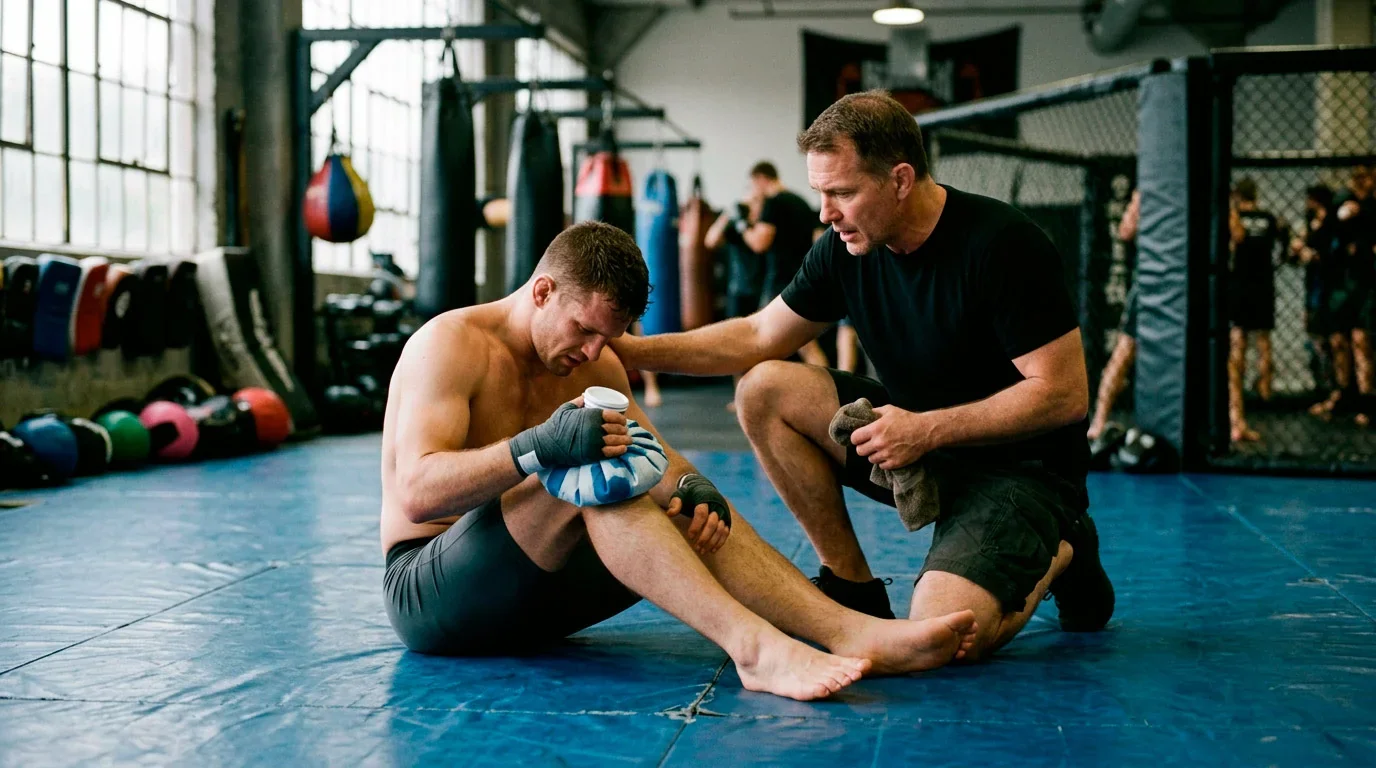
The single most expensive lesson I ever learned about UFC betting cost me three hundred quid on a Tuesday night. I had backed a heavy chalk lightweight on Monday at -350. By Tuesday afternoon, a routine training-camp video had been posted to the fighter’s social media showing him limping out of a sparring round. The video was thirty seconds long, the limp lasted maybe three seconds, and I dismissed it as a tweaked ankle that would settle by Saturday. The market moved his price from -350 to -280 overnight. By Friday he was -200. By Saturday morning he was -160, and I was sitting on a bet that the closing line was telling me had been a terrible read.
He still won the fight. He won it ugly, on the cards, and looked compromised the whole time. My bet cashed, which was technically a good outcome and operationally a lucky one. The closing line was right; I had taken a price 190 cents worse than the market eventually settled on, and the only reason I escaped was variance. The lesson stuck. Injury news is the single fastest-moving piece of information in UFC betting markets, and ignoring it is the most expensive habit a punter can carry.
Validating UFC Training Camp Injury Reports
UFC injury news comes from three categories of source, and they aren’t equally useful. The first is official UFC and athletic commission communications — fight cancellations, weigh-in misses, medical suspensions. These are by definition real news, but by the time the official announcement lands, the market has usually already moved. Useful for confirmation, not for timing.
The second is the fighter’s own social media. This is where most of the genuinely usable injury intelligence comes from in modern UFC. A training video showing a fighter favouring one side, a missed Wednesday weigh-in update, a sudden quiet week from a fighter who normally posts daily — all of these are signals. The bookmaker’s traders monitor the same feeds, but the time between a post going up and the line moving is sometimes hours, particularly on prelim fights with thin market attention. That window is where alert punters extract value.
The third category is gym gossip, MMA media speculation, and podcaster takes. Most of this is noise. The signal-to-noise ratio is low enough that I genuinely don’t track most of it any more. The exceptions are a handful of reporters with documented track records of accurate camp reporting — names I won’t list because the cohort changes, but you’ll recognise them after a few months of watching which leaks turn out to be accurate. Sources without a track record of accuracy aren’t worth the time, regardless of how plausible the rumour sounds.
How Markets Actually Move on Injury Reports
The pattern is consistent enough to anticipate. An injury report hits — a training-camp video, a reputable reporter’s tweet, an official update. The line on the affected fighter widens immediately on the sharpest book, typically the one with the highest stake limits and the most attentive trading desk. Within thirty to ninety minutes, the other UK books follow. By the next morning, the line has fully settled at the new consensus.
The magnitude of the move depends on the credibility of the report and the position of the fighter. A vague training-camp video of a tweaked ankle might move a -300 favourite to -250 — a 50-cent move, modest but meaningful. A confirmed weight-cut struggle reported by a credible source might move a -250 favourite to -150 — a 100-cent move that fundamentally reshapes the fight’s pricing. A confirmed weigh-in miss, where the fighter has formally failed to make weight, can move the line by 200 cents or more depending on the weight differential.
The window for acting on injury news is narrow. By the time the news has broken and you’ve decided what to do, the market has usually moved 60% to 70% of the way to its eventual closing price. You’re rarely getting the original line back. But the remaining 30% to 40% of the move is still worth capturing if your read is that the news is more significant than the market has yet priced in.
The Three Injury Categories That Matter Most
Not all injuries affect fight outcomes equally. Three categories are worth tracking carefully because they tend to be under-priced even after the news breaks.
First: hand and arm injuries on strikers. A boxer with a hand injury can’t punch at full power without risking further damage. The fighter is forced to compensate by leading more with the other hand, holding shots back to protect the injured hand, and avoiding the exchanges that produce knockouts. The market often discounts the hand injury significantly, but the underlying tactical effect is larger than the discount suggests. A striker with a documented hand issue going into a fight against a wrestler is a much weaker prospect than the moneyline suggests after the price has moved.
Second: leg and knee injuries on wrestlers. A wrestler with a knee injury can’t shoot takedowns with full commitment. The market discounts the wrestler, but the tactical question is what the wrestler does instead — back to striking, which the wrestler typically does poorly, or trying to wrestle anyway with compromised mechanics, which leads to failed takedowns and bad positions. Either way, the wrestler is performing below his usual level by a margin that’s hard to quantify but consistently larger than the line move accounts for.
Third: weight-cut struggles. A fighter who is visibly dehydrated, weak, or compromised by the cut is a different fighter than the one whose tape you watched. Weight cuts that produce visible struggles (pulling out of weigh-ins, requesting catch weights, missing weight by significant margins) almost always produce poor performances. The market discounts them, but the discount usually under-reflects the actual performance hit because the cut affects everything — power, cardio, durability, fight IQ. A fighter coming off a brutal cut is the prototypical underpriced underdog when their opponent has had a clean camp.
The Weigh-In Window and Late News
UFC weigh-ins happen the morning before fight night, and the period between weigh-ins and the fight is where the last meaningful injury news typically breaks. A fighter who looked drained at weigh-ins, who took longer than expected to recover, or who pulled out of any post-weigh-in promotional activity is sending signals that the bookmaker’s traders are watching for.
The line moves between weigh-ins and the fight are usually small but directionally meaningful. A favourite who looked compromised at weigh-ins might drift 20 to 40 cents on the morning of the fight. That move is the market’s read on the visible weight cut, and it’s usually right. Backing the underdog at the post-weigh-in price is one of the cleanest information-driven bets the calendar produces — the move has already happened, but the underlying performance question is still genuinely open, and the line hasn’t fully captured the asymmetry.
Late-breaking news in the hours before the fight is harder to act on. Many UK books restrict betting or close markets entirely once weigh-ins complete or as the fight approaches. The bets you place need to be in by Saturday morning typically, before the last news cycle. Anything that breaks Saturday afternoon — a fighter pulling out, a cancellation, a medical issue — will usually trigger market closure or settlement rules that void affected bets. Read the bookmaker’s specific late-news settlement policy before staking on anything within 24 hours of fight time.
What to Do When the News Goes Against Your Bet
The hardest skill in injury-news betting is not picking which news to bet into. It’s deciding what to do when the news breaks against a bet you’ve already placed. You have three options.
First: hold. If your original read was that the fighter was the right price at -250, and the injury news has moved him to -180, the bookmaker’s model has shifted but your original analysis may still be more accurate than the new line. Hold the bet, trust the original read, accept the variance. This is the right move when the news is vague or unverified.
Second: cash out. If the bookmaker offers a cash-out price that’s better than what you think the actual probability of the bet still landing is, take it. Cash-out values typically include a 5% to 10% bookmaker margin, so the maths is usually against this move — but for a meaningfully bad piece of news, cashing out at 70% of the original stake is better than holding and watching the bet die. The cash-out guide covers when this move actually makes sense.
Third: hedge. Place an offsetting bet on the other side at the new line. This locks in a guaranteed outcome — a small loss in most cases, occasionally a small profit if the line has moved far enough. The arithmetic on hedging is rarely positive in expected value terms, but it does cap the downside, and there are bankroll-protection situations where capping the downside matters more than maximising EV.
What I won’t do is panic. The instinct to immediately bail on a bet at the first sign of negative news is a leak that compounds across hundreds of bets. Most injury news isn’t fight-changing; the fighter recovers, makes weight, fights normally, and the bet plays out at the original probability. Acting on every minor wobble means you’re paying a 5% to 10% cash-out margin on bets that didn’t need to be exited. Restraint is the operating position.
The Information Edge That’s Still Available
Despite years of professional analytics arriving in MMA, injury news remains one of the corners of UFC betting where attentive amateurs can still extract real value. The bookmaker’s model is fast but not always fast enough on prelim fights and Tuesday-night training videos. The window for sharper bettors to act before the line fully adjusts is still measurable in hours rather than minutes for most non-headline cases.
The discipline that converts that window into edge is the same as everywhere else in betting: watch the right sources, read the signals honestly, act decisively when the news is clear, and stay disciplined when the news is ambiguous. The bookmaker’s traders are doing the same work. The punters who beat the closing line consistently are the ones doing it faster and with cleaner judgement than the average trader has time to deliver across a full UFC card.
How quickly do UFC betting lines move after injury news breaks?
The first move usually lands within thirty to ninety minutes of credible news, on the sharpest book in the market. Other UK operators follow within a couple of hours, and the full market consensus typically settles overnight. For prelim fights with thinner trading volumes, the move can take longer — sometimes most of a day — which is where attentive punters find the widest available windows to act.
Should I avoid betting fights with rumoured injuries?
It depends on whether the rumour is credible. Unverified social media speculation isn’t a reason to skip a fight — most of it turns out to be noise. Credible reporter sourcing or visible video evidence is a different matter; in those cases, either bet the news through (if your read of the line move is that it’s under-priced) or skip the fight entirely. Betting into ambiguity rarely produces positive long-run results regardless of which side you take.
Created by the ”how can i bet on ufc Fights” editorial team.