UFC Pre-Fight Press Conferences: Reading Real Signals from Theatre
 Available in US
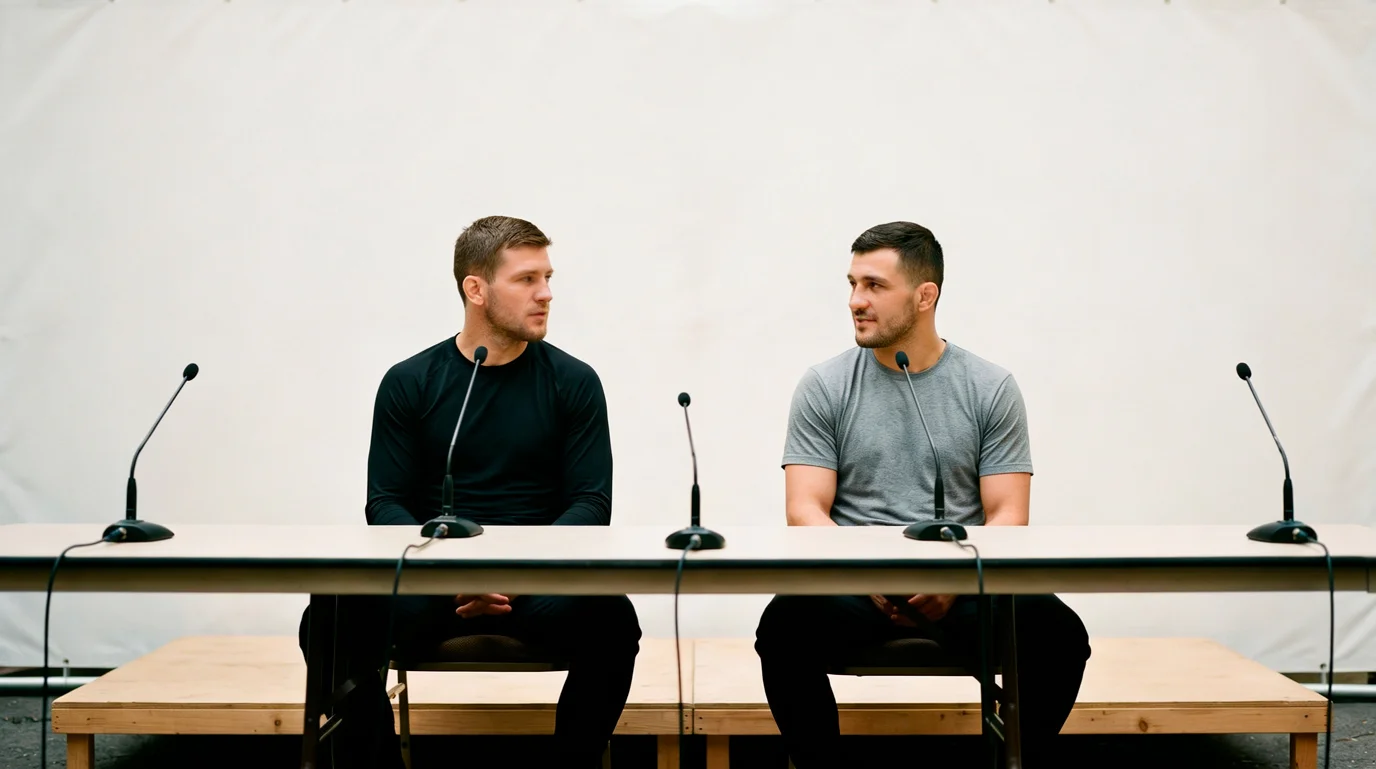
I used to ignore UFC press conferences entirely. They’re 80% theatre, 15% promotional bluster, and 5% genuine information — and I figured the time spent watching them was better spent on tape. Then in 2020 I watched a featherweight bantering at a press conference, looking visibly tired despite three days still to go before the cut started, and I realised the 5% was where the gold was buried. The fighter lost his bout by mid-second-round TKO, a clean read that would have been worth a meaningful underdog bet if I had taken the press-conference cues seriously. The lesson was permanent: 5% genuine information across an hour of theatre is still 5% genuine information, and ignoring it is its own kind of laziness.
The trick is filtering the signal from the noise. Most of what gets said at a press conference is recycled storyline, ego performance, and intentional misdirection designed to sell the fight. The signals worth tracking are largely non-verbal — body language, energy levels, eye contact, recovery from the dais — combined with a small subset of verbal cues that experienced fighters consistently send.
The Energy Read
The single most useful signal at a press conference is how energetic each fighter looks. A fighter with three days to go before weigh-ins should look reasonably fresh — present, engaged, alert. A fighter visibly exhausted at a Wednesday press conference is in trouble. The cut has already started, the energy reserves are depleting, and the path from current state to fight-night performance is going to involve more dehydration and less recovery than it should.
The diagnostic is comparative. The fighter who normally drives press conferences with personality and is suddenly quiet, slow to respond, and visibly tired is sending a signal. The fighter who normally maintains professional reserve and is suddenly snappy and irritated may be having a difficult cut. Personality changes that don’t track with the matchup or the storyline are usually about the body, not the mind.
I rank fighters on a simple three-state energy scale before every press conference: above baseline (unusually energetic, often a sign of confident preparation), at baseline (normal level, no signal either way), or below baseline (visibly tired, irritable, or withdrawn). The below-baseline reads have produced the most consistent betting value in my tracking. Fighters who look depleted at Wednesday press conferences underperform their odds on Saturday at a noticeable rate.
Eye Contact and Body Language at the Face-Off
The traditional press-conference face-off — fighters standing nose-to-nose for a staged photo — is the moment that produces the most diagnostic body-language data. Watch the eyes, the breathing, and the shoulder posture.
Fighters who maintain steady eye contact and breathe slowly through the face-off are reading as confident and present. The body is settled, the mind is engaged, the matchup is being treated seriously without anxiety. This is the baseline state for a well-prepared fighter.
Fighters who break eye contact, look down or away, or appear physically uncomfortable during the face-off are sending a signal — though the signal isn’t always obvious. Some fighters are introverted and never enjoy face-offs regardless of how they feel about the fight. Others use a deliberate “I don’t engage with theatre” approach that looks similar from outside but means something different. The diagnostic is comparison to the same fighter’s previous press conferences. If they normally face off confidently and this time they don’t, something has changed.
Fighters who over-perform — staring intensely, jabbing fingers, raising voices, escalating the energy unnecessarily — are sometimes covering for unfamiliar nervousness. Excessive aggression at press conferences is occasionally a sign of confidence, but more often a sign of nerves the fighter is trying to mask. Veteran champions who don’t need to prove anything rarely escalate; rising contenders fighting outside their normal weight class often do.
Verbal Signals Worth Tracking
Most of what gets said is noise, but a handful of verbal patterns are genuinely diagnostic.
First: specific tactical references. A fighter who can describe the opponent’s striking style accurately, name specific tactical adjustments their camp has made, and articulate a clear game plan is signalling thorough preparation. A fighter who falls back on generic answers (“I’m going to go in there and do my thing”) may have done less specific work than the press conference allows them to demonstrate.
Second: weight cut admissions. Fighters who voluntarily mention the difficulty of the cut — even casually — are usually telling the truth, because admitting cut struggles costs them nothing. The fighter who says “the cut has been brutal this time” three days out is the fighter you should fade. The fighter who says nothing about the cut isn’t necessarily fine; they might just be more guarded. But the voluntary admission is rarely wrong.
Third: future plans. Fighters who talk extensively about what they want to do after this fight — who they want to fight next, what title they want to target — are sometimes signalling that they’re looking past the current opponent. This is occasionally just confidence but is more often a tell that the fighter is mentally elsewhere. The fighter focused on Saturday is the one who talks about Saturday. The fighter answering questions about next October’s title shot is the one whose preparation may have slipped.
The Storyline Trap
Press conferences exist to sell fights, and the storyline that emerges from a press conference is the storyline that drives public money. Two fighters who have history together produce more betting volume than two fighters meeting for the first time. A “grudge match” between two fighters who don’t like each other produces more action than a respectful matchup. As Dana White has put it, “The fight game is built on storylines. Without the storyline, you’ve just got two guys in a room.”
The betting implication is that storyline-heavy fights have distorted lines. Public money flows to the favourite in the storyline narrative, regardless of whether the favourite is actually the better matchup. The underdog in the storyline often offers value the matchup alone would suggest is too generous, because the line has been pushed to balance the action rather than to price the fight.
The discipline is to separate the storyline read from the matchup read. The press conference is a storyline-generation machine. Watch it for the body-language and energy signals, then completely set aside the storyline narrative when you build your betting model. Bet the matchup, not the narrative. The lines that emerge from heavy storyline weeks are systematically off-market on the underdog side, and the patient bettor who fades the public’s storyline preference produces consistent edge over time.
Press-Conference Absences and Cancellations
Sometimes the signal is the absence itself. A fighter who misses a scheduled press conference — particularly without explanation — is sending a stronger signal than anything they could have said. The most common reasons are illness, injury, or weight-cut difficulty severe enough to require medical attention. None of these are good news for the fighter’s performance on Saturday.
The market doesn’t always move on press-conference absences, particularly if the official explanation is “scheduling conflict” or similar boilerplate. But the underlying reason for the absence is rarely scheduling. A fighter eight weeks into a training camp doesn’t have scheduling conflicts that override a UFC-mandated promotional obligation. Something has happened. The fighter who misses the press conference and shows up to weigh-ins looking compromised on Friday is the fighter whose absence on Wednesday was actually telling the story.
Cancellations of the entire press conference are different — usually they reflect logistical or UFC-management issues rather than individual fighter problems. But individual absences from scheduled press conferences are diagnostic, and the bookmaker’s traders are watching the same room you are. The line on the absent fighter will typically drift wider in the hours after the absence; the question is whether the drift fully accounts for the implicit information about why they were absent.
Putting Press-Conference Data Into the Bet
The practical workflow is the same as everything else in UFC betting: watch the signals, compare them to the line, take the side the line hasn’t fully priced. A fighter who looked clearly depleted at the press conference but whose price hasn’t moved is the fighter to fade. A fighter who looked above-baseline energetic but is still priced as a heavy underdog is the fighter to back, particularly when other variables also support the read.
Press-conference signals work best as confirmation rather than as standalone evidence. If your matchup analysis already suggested an underdog edge, a clearly compromised favourite at the press conference is the confirmation that converts the analysis into a stake. If your matchup analysis was inconclusive, a press-conference signal alone is rarely strong enough to bet on. The signal compounds with other information; it doesn’t replace it.
For the broader question of how to combine press-conference reads with weigh-in observations on Friday — the two information events that most consistently produce late-week betting edge — the weight cut betting guide covers the weigh-in side of the same information workflow.
The Five Percent That Matters
Most of a UFC press conference is exactly what it looks like — promotional theatre designed to sell tickets and pay-per-view buys. But the 5% of real information embedded in the theatre is some of the most actionable late-week data the calendar produces. Body language, energy levels, voluntary admissions, and notable absences all carry weight when combined with the broader matchup picture.
The bookmaker is watching the same press conference. The traders are reading the same signals. The window for punters to extract value isn’t about seeing things the trader missed — it’s about acting on the signals faster than the line fully adjusts. Wednesday afternoon, after the press conference, before the bulk of the market has fully processed what they saw, is one of the cleaner betting windows of the fight week. Use it.
Do UFC press conferences actually affect the betting lines?
Yes, modestly. Lines typically move 10 to 30 cents on the moneyline in the hours after press-conference reveals — visible weight-cut concerns, withdrawn behaviour, or unusual energy levels all show up in the price within a working day. The move is rarely as large as a confirmed injury report would produce, but it’s reliable enough that early-week bettors can sometimes capture the pre-move price by acting Wednesday afternoon.
Should I weight press-conference signals more than weigh-in observations?
No, weigh-ins are more diagnostic. By Friday morning, fighters have done the bulk of their cut and the physical evidence is harder to disguise than a Wednesday press conference. Press-conference signals are useful as early indicators that something might be off; weigh-in observations are the confirmation that converts an early hunch into a concrete betting case. Use the press conference to identify fighters to watch closely on Friday, then bet based on what Friday shows you.
Created by the ”how can i bet on ufc Fights” editorial team.