UFC Five-Round Main Event Betting Strategy
 Available in US

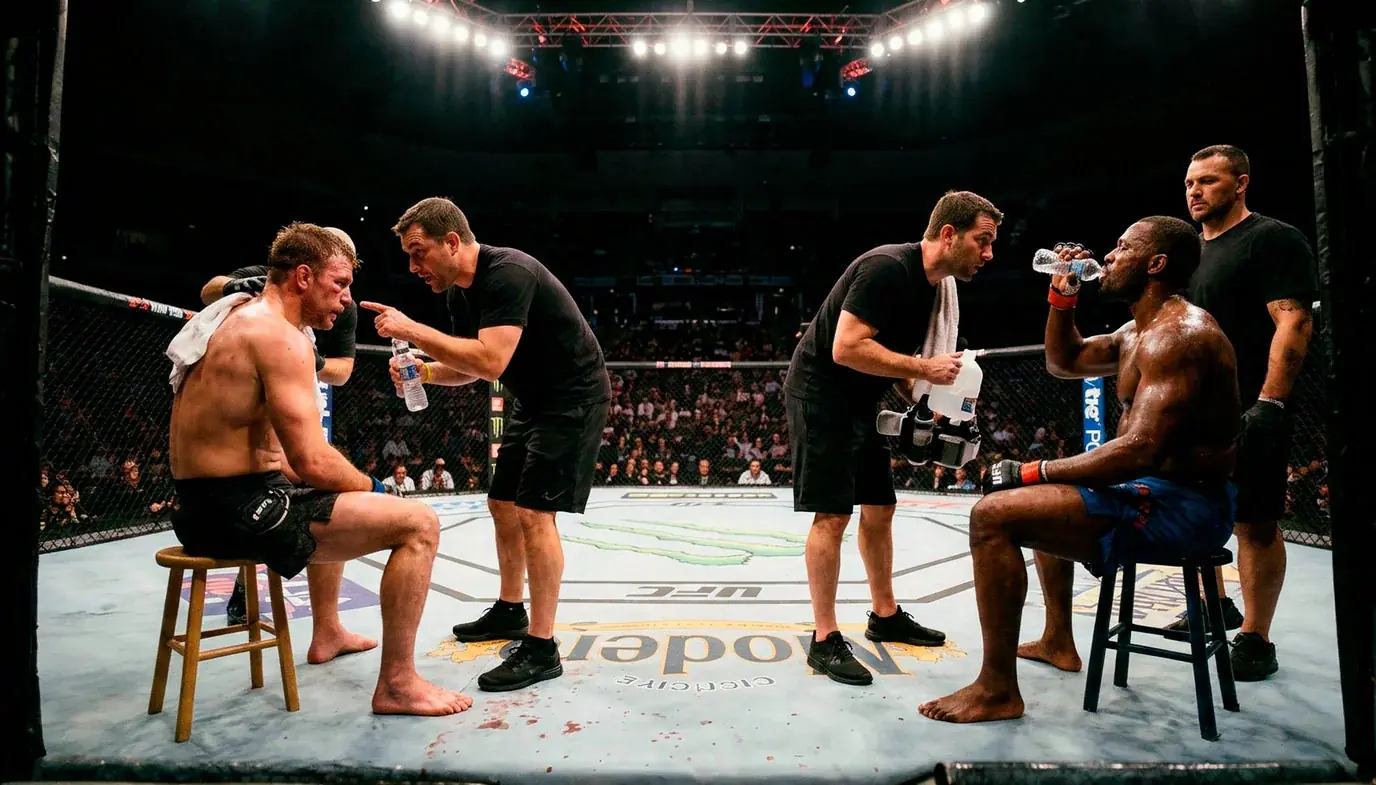
The five-round main event is a different sport than the three-round preliminary, and the punters who treat them the same are the punters who lose money on Saturday nights. The extra ten minutes don’t just extend the fight — they change which skills matter, which fighters cash, and which markets produce the cleanest edges. Cardio becomes the dominant variable. Method-of-victory distributions shift toward later rounds. The over/under 3.5 line, which doesn’t exist on three-rounders, becomes the most analytically interesting market on the entire card. Treat the main event like a three-rounder and you’re missing the half of the fight that determines the result.
I made this mistake for years. I would build the same model for a championship five-round main event that I used for a Tuesday-night Fight Night prelim, and wonder why my main-event win rate was consistently worse than my prelim hit rate. The answer was simple: I was pricing five rounds with three-round logic. The market wasn’t. The market was treating the five-round main event as a structurally different question, and the lines that emerged from that recognition were lines I was systematically taking the wrong side of.
How the Extra Ten Minutes Reshape Finish Distributions
Three-round fights distribute their finishes heavily in round one — roughly 45% of all UFC stoppages occur in the first round, with the rate decreasing through rounds two and three. The truncated three-round format limits how much the fighter who’s behind on the cards can do; if you haven’t won round one and you can’t finish round two or three, you’re losing the decision.
Five-round main events flip this distribution. Round one is still finish-heavy in absolute terms, but rounds four and five become genuine finish opportunities in ways they aren’t on shorter fights. The fighter who’s behind on the cards has time to find the finish; the fighter who’s winning gets the cumulative damage advantage that allows late stoppages. The over-under 4.5 rounds market on a main event captures this shift directly — historical data suggests roughly 35% to 45% of five-round main events end in rounds four or five, depending on the matchup.
The market knows this in aggregate but routinely misprices it on specific matchups. A wrestler-versus-striker main event where the striker has demonstrated cardio issues in past fights is a clean read for a round-four or round-five finish for the wrestler. The market often prices this fight as a round-three or decision proposition, treating the championship rounds as symmetric extensions of the earlier rounds. The asymmetry — that championship rounds favour the conditioned fighter at an accelerating rate — is the value the bookmaker leaves on the table.
Cardio as the Dominant Variable
The single most important question to ask about a five-round main event is which fighter has the better proven cardio. Not which fighter looks fitter. Not which fighter trains harder. Which fighter has actually performed at high intensity for 25 minutes in past five-round bouts. That track record is the most predictive piece of information you can find about the late rounds, and the market often gives it less weight than it deserves.
Cardio doesn’t decline linearly. It declines in cliffs. A fighter with mid-tier cardio looks fine for the first three rounds and falls off a cliff in round four. A fighter with elite cardio maintains output through round five at near-baseline levels. The difference between these two profiles is invisible in three-round fights and decisive in five-rounders, and the market struggles to price the asymmetry because there isn’t always recent tape to confirm where the cliff is.
The best predictor of championship-round performance is past championship-round performance. A fighter who has performed strongly in rounds four and five of previous main events is statistically more likely to perform strongly in rounds four and five of this main event. A fighter who has wilted in past championship rounds is statistically more likely to wilt again. This pattern is robust across hundreds of historical main events and the market prices it imperfectly because it’s a slow-moving variable that doesn’t show up in recent fight-night highlights.
Round Group Betting on Five-Rounders
Round group markets — fight ends in rounds 1-2, 3-4, 5, or by decision — are where the analytical work on five-round main events pays best. The bookmaker prices the four buckets with rough probabilities of perhaps 30%, 20%, 12%, and 38% respectively, and applies margin across all four. The bucket where edges most reliably appear is rounds 3-4 — the middle section where cardio asymmetries land but championship-round factors haven’t fully taken over.
On a matchup where one fighter has obviously better cardio and the other has decent power early, the rounds 3-4 finish is often the modal outcome but is priced as the third-likeliest. The combination of accumulated damage from the early rounds and the cardio cliff in round four produces stoppages that the market under-prices because they don’t fit either the “early finish” or “go to decision” narratives the market is built around. Targeted bets in this bucket have been consistently profitable in my tracking.
Round 5 finishes are the rarest bucket — typically priced as 8-12% probability — and they’re rare for good reason. By round five, the fighter who’s behind on the cards is desperate, but their cardio is exhausted and their finishing power is diminished. Most round-five finishes come from the fighter who’s already winning, landing a cumulative-damage stoppage on an opponent who can no longer defend. Backing the favourite to finish in round five specifically is a long-priced bet that occasionally hits but is rarely a positive expected value play on its own.
The Pacing Question
Five-round main events also reward fighters who can pace themselves intelligently — neither emptying the tank in round one nor coasting through the early rounds. The pacing profile of each fighter is a separate analytical question from raw cardio, and it shows up most clearly in pre-fight strategy commentary and in the fighter’s track record across longer bouts.
Aggressive pressure-fighters who go full-pace from round one often find round four catastrophic. The strategy that wins three-round fights — overwhelm the opponent early, force them to defend constantly, never let them set their feet — runs into a physiological wall in a five-rounder. Some fighters adapt. Many don’t. The bookmaker prices the aggressive fighter on their three-round form, and the five-round version produces a different result.
Methodical, distance-management fighters tend to translate better to five-round fights. They have built their entire approach around output sustainability, and the extra ten minutes reward the patient accumulation rather than punishing it. The market often under-prices these fighters in five-round main events relative to their three-round form, because their three-round performances look less impressive than the aggressive striker who finishes in round one and looks like a worldbeater.
Title Fights and the Public Money Distortion
Title fights in particular attract heavy public money on the champion. The champion’s title status, name recognition, and media coverage push the line in their direction beyond what the underlying matchup justifies. Roughly 75% of public money on a championship main event typically backs the champion, and the bookmaker adjusts the line accordingly to balance the action.
The result is that title-fight underdog prices are often longer than the underlying matchup probability suggests. A challenger priced at +250 in a championship fight might have a 40% probability of winning the fight on the matchup — the price is reflecting the public’s preference for the champion as much as the actual fight question. UFC’s media engine produces enormous betting volume on these cards. As Dana White has put it, “The UFC is the fastest-growing sport in the world.” That growth has translated into enormous public-money distortions on the biggest fights.
The implication is that championship-fight challengers are over-represented in profitable underdog plays. Not every title underdog is a value bet, of course — many of them are correctly priced as substantial underdogs because they are substantial underdogs. But the price distortion from public money does tilt the cohort toward better expected value than the equivalent prices on non-title five-round fights. Worth a closer look on title cards specifically.
For the broader question of how main-event pricing differs from prelim pricing — and the bankroll implications of betting the higher-leverage spots — the Fight Night versus PPV piece covers the structural differences between card types.
The Cardio-Aware Operating Position
The cleanest mental model for five-round main events is to treat the first three rounds as the warmup and the last two as the actual fight. Most main events are decided in rounds four and five, either by accumulated damage producing a stoppage or by the cardio cliff exposing the underprepared fighter. Bets that price this reality correctly tend to outperform; bets that price five-rounders as longer three-rounders tend to lose to the closing line.
Watch the championship-round tape. Note which fighters have produced sustained output in rounds four and five and which have wilted. Build your matchup reads around that data, not around the highlight-reel three-round performances that dominate the public conversation. The market is slowly improving its pricing of championship rounds, but the slow pace of the improvement leaves room for attentive bettors to extract edge year after year.
What percentage of UFC five-round main events go to decision?
Roughly 40% to 45% of five-round main events end in a decision verdict, with the remainder split across finishes — KO/TKO at about 30%, submissions at about 15%, and a small minority ending in technical decisions or no-contests. The decision rate is slightly higher than the comparable rate for three-round prelim fights because the extra rounds give each fighter more time to recover from compromised positions and force the judges to score a longer sample of action.
Should I bet differently on five-round non-title main events compared to championship fights?
Yes, modestly. Non-title five-rounders are typically less affected by public-money distortion because the audience is smaller and the storylines less heavy. Title fights attract the heaviest public action, which usually tilts toward the champion. Challenger underdog prices in title fights tend to run longer than the underlying matchup justifies; non-title underdog prices are typically more efficient. Both card types reward cardio-focused analysis, but the price distortions differ.
Prepared by the how can i bet on ufc Fights editorial staff.